One School from PK Through Grade 12: Why Continuity Matters
Practical guidance from the people who run the school — written to be useful whether or not you choose us.
In most California school districts, your child will change schools twice before graduation: once from elementary to middle school, and again from middle to high school. Each move is treated as normal, and it is, in the sense that everyone does it. But normal is not the same as free. Every one of those transitions resets three things a child has spent years building: relationships with teachers, a circle of friends, and a school culture they know how to live in.
This article is about the alternative, one school community from preschool through Grade 12, and what continuity changes for a child and a family.
 South Hills Academy, West Covina
The Two Resets Built Into the Usual Path
Think about what a school change actually costs, from the child's side of the desk.
The teachers reset. By the end of elementary school, teachers know how your child learns: who needs to be pushed, who needs to be drawn out, who freezes on tests but shines in discussion. At the new school, that knowledge is gone. Your child starts over as a name on a roster, and the new teachers spend months rediscovering what the old ones already knew.
The friendships reset. Feeder patterns scatter classmates across different schools. Some friendships survive; many quietly don't. Your child rebuilds a social circle from scratch: at eleven, and then again at fourteen.
The culture resets. Every school has unwritten rules: how discipline works, how students treat each other, what gets you noticed for good or bad reasons. A child who had learned to thrive under one set of rules starts again under another.
Now notice the timing. These resets land at the two most turbulent stretches of childhood, the start of adolescence and the start of high school, exactly when a child benefits most from being surrounded by adults who already know them well.
What Stays When a Child Stays
In a school that runs from PK through Grade 12, the picture is different.
Adults with a long memory. Teachers and staff watch a child grow over years, not semesters. The teacher who taught your child to read is still on campus when that child is writing essays. When a normally cheerful seventh grader goes quiet, the adults around them notice, because they have years of baseline to compare against, not weeks.
Problems tracked, not re-diagnosed. If a child struggled with math in Grade 4, the school that helped them through it still remembers in Grade 7. Nothing gets lost in a records handoff between institutions, and no one has to rediscover a challenge the family already worked through once.
Confidence that compounds. Being known counts for a lot at that age. Students who don't have to spend a year re-establishing who they are put that energy into trying out for the team, running for student council, or raising their hand, because the social ground under their feet is solid.
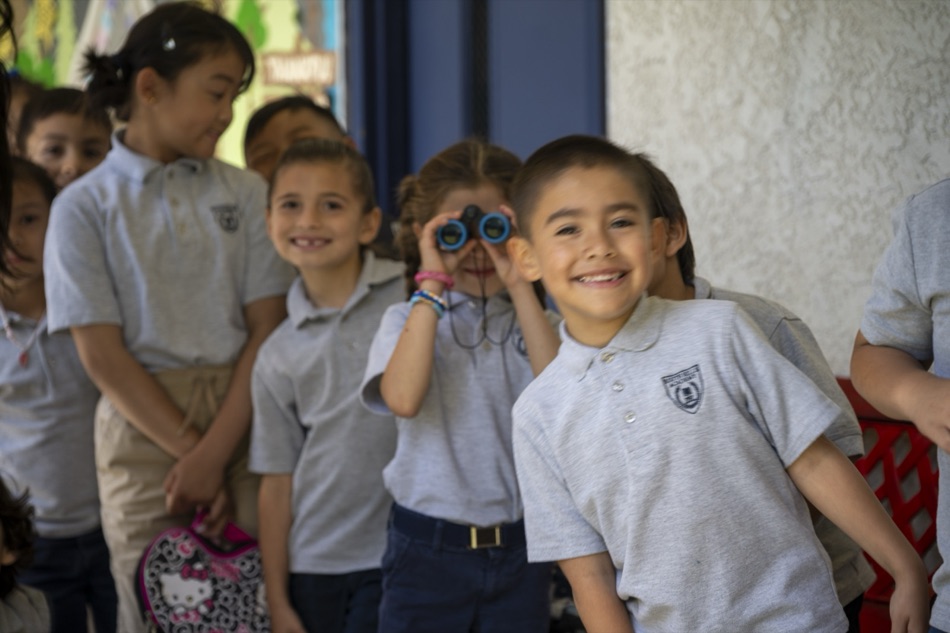
Older and younger students in one community. Younger students see, up close, what they are growing toward; older students learn to be looked up to. That is hard to replicate in a system where each school contains only a narrow band of ages.
College Planning Starts Earlier Than You Think
A practical advantage families rarely consider until high school: in a PK–12 school, college planning can start whenever your child needs it to, not just in Grade 9.
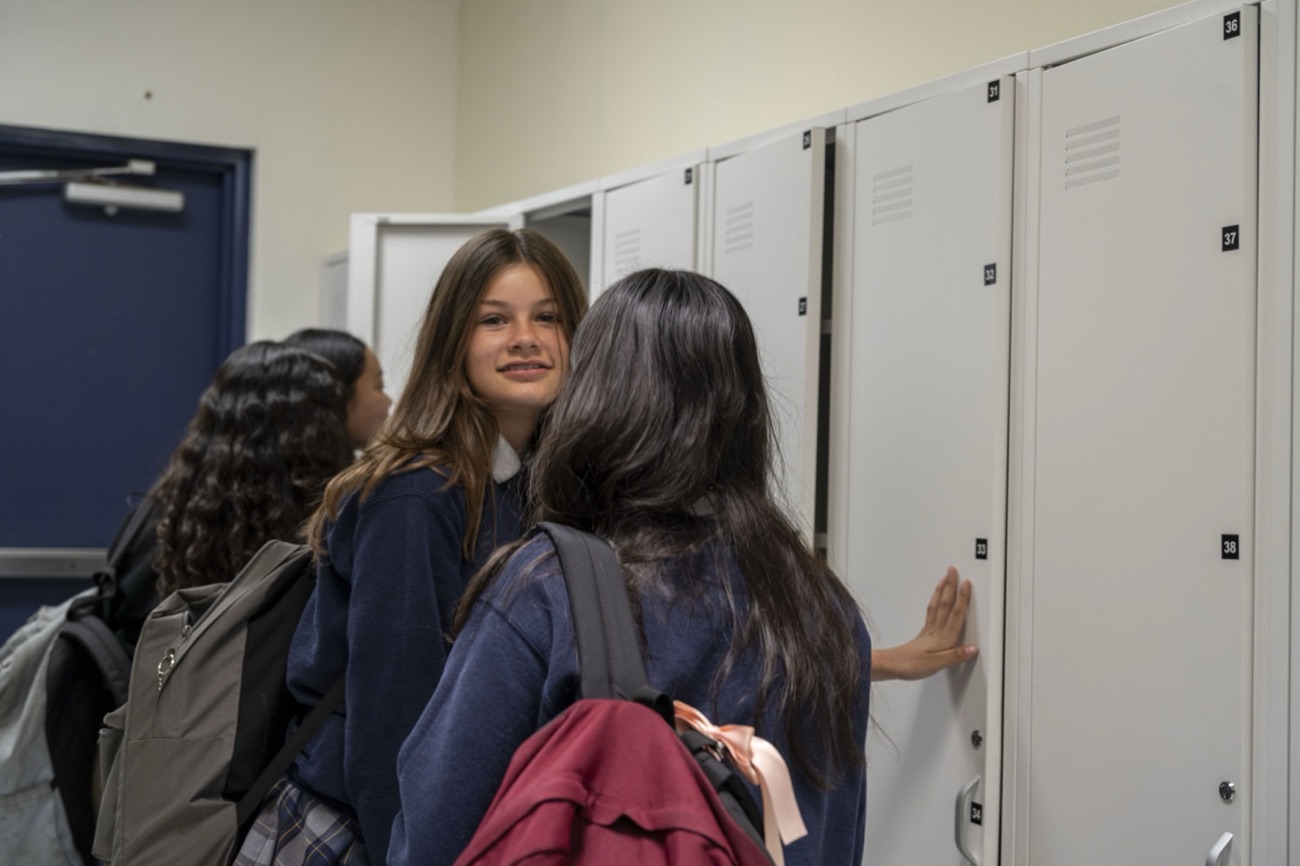
Course choices in middle school shape what is possible in high school, especially for students aiming at UC A–G requirements and AP coursework. Our high school offers 31 AP courses, and every graduate has gone on to a Top 100 university. In one school community, the people doing 1:1 college guidance in Grade 11 are colleagues of the people who taught your child in Grade 6. The plan is built on years of firsthand knowledge of the student, not on a file that arrived with them. You can see where that leads on our outcomes page.
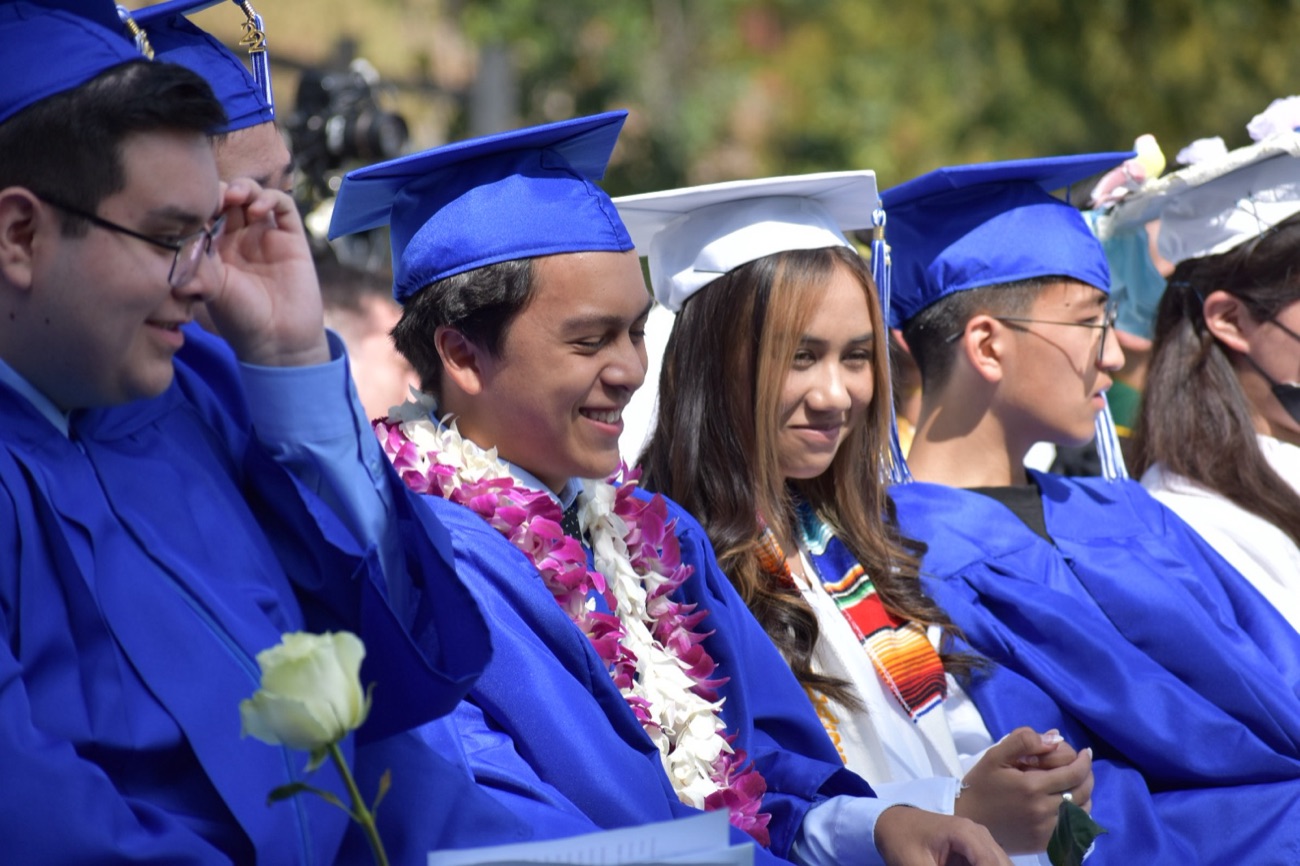 South Hills Academy graduates at commencement
The Practical Side for Parents
Continuity also simplifies family life in unglamorous but real ways.
- Siblings in one school. One calendar, one set of expectations, one front office that knows your family, plus a sibling discount on tuition. (Ask our admissions office for the details.)
- One relationship with the school. You are not re-introducing your family, your child's history, and your concerns to a new institution every few years.
- No application seasons in between. Families at multi-school pathways often spend Grade 5 and Grade 8 applying, testing, and touring all over again. A PK–12 family spends those years just being at school.
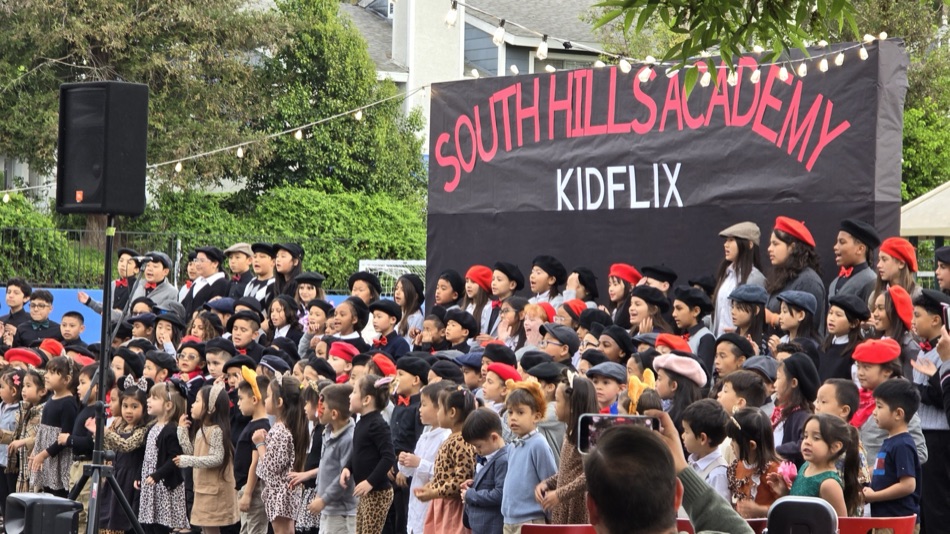 An all-school event, from the youngest grades up
How South Hills Academy Is Set Up
South Hills Academy runs as one school community on two campuses in West Covina: the Lower School Campus (PK–Grade 8) at 1600 E Francisquito Ave, West Covina, CA 91791, home to our preschool, elementary, and middle school, and the Upper School Campus (Grades 9–12) at 311 S Citrus St, West Covina, CA 91791.
Moving to the Upper School Campus for Grade 9 is a change of address, not a reset. Same school, same records, same 10–15 student classes, and teachers on both campuses who compare notes about the same students. The one transition that remains is planned and supported by people who have known your child for years.
To be fair: continuity is not a magic ingredient, and a few children really do benefit from a fresh start. But a fresh start chosen for a reason is very different from two resets imposed by the structure of a system. If you would like to see what a K–12 community feels like in person, come walk both campuses with us.