A Competitive Edge for University Admissions
A rigorous UC A–G curriculum, 31 AP courses, and a 1:8 teacher-to-student ratio (1:4.7 counting all staff) — preparing graduates for top universities and real-world challenges.
Life in High School
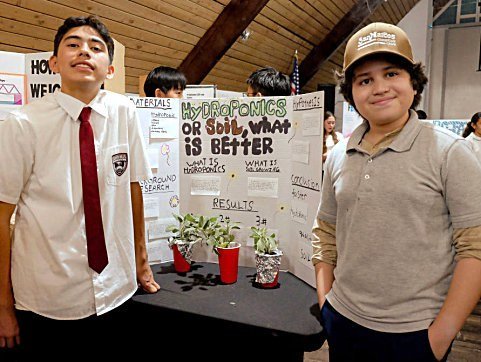
Our students in their own words — and the showcase they put on.
 Student Voices🔊 Tap for sound
My teachers are always willing to help and make learning engaging. Because we have flexibility in choosing some courses, I was able to take Health Science to prepare for my goal of studying Nursing.
 Performing Arts🔊 Tap for sound
I used to be shy and unsure about speaking up. Now I'm involved in student council and regularly volunteer at school events. I'm more confident in myself and comfortable being who I am.
Results Families Can Count On
100% of our graduates are admitted to Top 100 U.S. universities, 90% to the Top 50, with an average SAT of 1280+.
View The Full Class Of 2023–2026 Admissions List (60+ Universities)
National Universities · U.S. News 2026 Ranking
| U.S. News 2026 | University | Admitted |
|---|---|---|
| #5 | Yale UniversityTOP 10 | 1 |
| #6 | Duke UniversityTOP 10 | 1 |
| #6 | Northwestern UniversityTOP 10 | 1 |
| #10 | University of PennsylvaniaTOP 10 | 1 |
| #11 | Cornell UniversityTOP 25 | 3 |
| #11 | University of ChicagoTOP 25 | 1 |
| #13 | Brown UniversityTOP 25 | 1 |
| #13 | Columbia UniversityTOP 25 | 2 |
| #15 | UC Los Angeles (UCLA)TOP 25 | 12 |
| #17 | UC BerkeleyTOP 25 | 6 |
| #18 | Rice UniversityTOP 25 | 2 |
| #21 | Carnegie Mellon UniversityTOP 25 | 2 |
| #22 | UNC–Chapel HillTOP 25 | 1 |
| #24 | Emory UniversityTOP 25 | 2 |
| #24 | University of VirginiaTOP 25 | 5 |
| #27 | USCTOP 50 | 9 |
| #29 | UC San DiegoTOP 50 | 31 |
| #30 | New York UniversityTOP 50 | 11 |
| #30 | University of FloridaTOP 50 | 1 |
| #30 | UT AustinTOP 50 | 1 |
| #33 | UC IrvineTOP 50 | 35 |
| #33 | UC DavisTOP 50 | 42 |
| #33 | UIUCTOP 50 | 17 |
| #39 | UC Santa BarbaraTOP 50 | 18 |
| #39 | Wisconsin–MadisonTOP 50 | 3 |
| #41 | Boston UniversityTOP 50 | 5 |
| #41 | Ohio State UniversityTOP 50 | 19 |
| #41 | Rutgers–New BrunswickTOP 50 | 16 |
| #44 | University of RochesterTOP 50 | 10 |
| #46 | University of WashingtonTOP 50 | 9 |
| #51 | Case Western Reserve | 9 |
| #51 | Virginia Tech | 1 |
| #54 | Northeastern University | 2 |
| #54 | Minnesota–Twin Cities | 1 |
| #58 | Stony Brook University | 5 |
| #58 | UC Merced | 13 |
| #58 | UMass Amherst | 1 |
| #63 | Brandeis University | 5 |
| #63 | Michigan State University | 2 |
| #63 | Penn State–University Park | 4 |
| #63 | Santa Clara University | 3 |
| #63 | University of Miami | 2 |
| #70 | University of Connecticut | 2 |
| #72 | Indiana–Bloomington | 1 |
| #76 | Stevens Institute of Technology | 1 |
| #76 | UC Riverside | 15 |
| #80 | Pepperdine University | 2 |
| #80 | UI Chicago | 3 |
| #80 | Rutgers–Newark | 2 |
| #84 | UC Santa Cruz | 17 |
| #91 | Fordham University | 1 |
| #148 | Parsons School of Design (The New School) | 1 |
Liberal Arts Colleges · U.S. News 2026 Ranking
| U.S. News 2026 | University | Admitted |
|---|---|---|
| #19 | Grinnell CollegeTOP 25 | 1 |
| #31 | Franklin & Marshall CollegeTOP 50 | 7 |
| #36 | Denison UniversityTOP 50 | 6 |
| #36 | Skidmore CollegeTOP 50 | 5 |
Global Universities · QS 2026 World Ranking
| QS 2026 | University | Admitted |
|---|---|---|
| #2 | Imperial College LondonTOP 10 | 2 |
| #3 | University of OxfordTOP 10 | 1 |
| #5 | University of CambridgeTOP 10 | 3 |
| #9 | University College LondonTOP 10 | 1 |
| #14 | Peking UniversityTOP 25 | 1 |
| #20 | Tsinghua UniversityTOP 25 | 1 |
| #25 | University of TorontoTOP 25 | 1 |
| #38 | University of British ColumbiaTOP 50 | 1 |
| #80 | Durham University | 1 |
TOP 10 / 25 / 50 badges reflect each university's own U.S. News 2026 (U.S.) or QS 2026 (global) ranking.
Eight Reasons Families Choose Our High School
The results speak first — and behind them, a system that carries every student from Grade 9 to a college they're proud of.
Proven College Results
90% of graduates admitted to Top-50 universities and 100% to Top-100 — with a class SAT average of 1280+.
See where grads go1:1 Counseling & a 4-Year Plan
A dedicated counselor guides every student from Grade 9 along a clear four-year roadmap — course choices, essays, and applications.
How we guide youSmall Classes · 1:8
An average class of 18 and a 1:8 teacher-to-student ratio — every student known by name, with parent conferences each report card.
UC A–G + 31 AP
A UC A–G aligned diploma and 31 AP courses — the rigor top universities look for, offered in person, hybrid, and online.
See the coursesAP Capstone
A two-year College Board research program offered at fewer than 1 in 20 U.S. high schools — a standout credential on any application.
Learn moreAI & STEM
Five hands-on labs plus everyday work with Google Gemini and Claude — students build with AI, not just learn about it. New for 2026–27.
Explore AI & STEMFree ESL
Structured ESL is included in tuition with no separate fee — so students from any background keep pace and reach mainstream and AP courses.
Learn moreCareer-Ready Pathways Coming Soon
A hands-on Building & Construction pathway with job-ready certifications — graduate ready for college, paid work, or both.
Explore pathways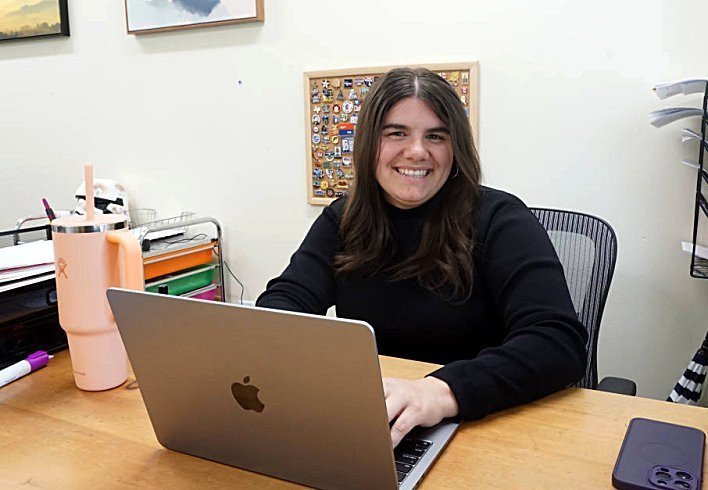
Guided One-on-One, From Grade 9
College counseling here starts in Grade 9 and never lets up. With a 1:8 ratio, every student is known by name — a dedicated counselor walks each student, one year at a time, from course choices to the final acceptance letter.
- A dedicated counselor for course choices, essays, and applications
- On-campus SAT & AP testing — students sit exams in a familiar place
- Every student, not just the top — real attention for the whole class
The Roadmap We Walk Together
From the first day of 9th grade to the last college decision in 12th — here is the plan your counselor builds with you. Tap any year to see the milestones.
- Build a strong GPA across the UC A–G core courses
- Move into Honors classes wherever you're ready
- Join clubs and commit to one or two activities you love
- Meet your college counselor and take the Holland (RIASEC) interest assessment
- Take your first AP course
- Begin AP Capstone with AP Seminar
- Sit your first AP exams in May
- Take the PSAT
- Go deeper in one or two activities
- Add more APs — two, three, or more
- Continue AP Capstone with AP Research
- Take the SAT or ACT in spring
- Sit AP exams in May
- Build your college list and begin formal college planning
- Step into leadership roles
- Finalize essays and request transcripts (Sept–Oct)
- Submit Early Action / Early Decision applications (November)
- Submit Regular Decision applications (January)
- Weigh offers and decide (December–April) — and finish your final AP exams
A Direct Path to UC A–G Admissions
Complete 24 courses over four years — or as few as three with an accelerated course load — to earn an SHA High School Diploma that meets the UC A–G Admissions Requirements — paving the way to top universities.
- UC A–G aligned graduation requirements
- Honors and AP tracks in every core department
- An official on-campus AP exam center — students test right here, no scrambling for an outside seat
Free ESL, Built Into the School Day
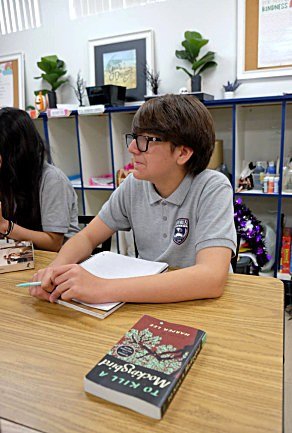
Students who need to strengthen their English get structured ESL support — at no extra cost, included in tuition — so learners from any background keep pace in every class and move into mainstream and AP courses.
- ESL 1 — core vocabulary, grammar, and everyday conversation for newcomers
- ESL 2 — advanced grammar and writing, the bridge into mainstream English
- Included, not extra — no separate fee, part of every student's day
Built Around the UC A–G Pathway
These are the University of California A–G subject requirements — the gateway to UC, CSU, and competitive universities nationwide. SHA's diploma meets every one. Open any subject area to see the courses we offer; AP marks an Advanced Placement course.
AHistory & Social Science2 years requiredOur courses
BEnglish4 years requiredOur courses
CMathematics3 years required · 4 recommendedOur courses
DLaboratory Science2 years required · 3 recommendedOur courses
ELanguage Other Than English2 years required · 3 recommendedOur courses
FVisual & Performing Arts1 year requiredOur courses
GCollege-Prep Elective1 year requiredOur courses
AP Capstone
A two-year College Board program where students investigate real questions, build evidence-based arguments, and present like college researchers — a rare, standout credential on any application.
- Year One — AP Seminar (Grade 10): investigate, argue, and present
- Year Two — AP Research (Grade 11): a year-long independent study you design
- Earn the AP Capstone Diploma — score 3+ on both, plus four more AP exams
AI & STEM, Built Into the Diploma
High schoolers choose from five hands-on labs — autonomous vehicles, drones & AI hardware, Unity game development, embedded systems, and soft robotics — taught with university-trained engineers. Google Gemini and Claude are woven into everyday coursework, so students build with AI, not just learn about it.

Dual Enrollment
Take real college courses while still in high school — earning transferable credit and exploring a major early. Open to every college-bound student.
Up to ~30 Credits
As much as a full year of transferable college credit before you set foot on campus.
College Courses, SHA Support
Real college courses on platforms like Canvas, with SHA teachers supporting you throughout.
1:1 Credit Planning
A counselor maps credits to your target universities and major, so every course counts.
For Every Student
Strengthen your application, get ahead on your degree, and test-drive a field early.
College-Bound — or Career-Ready on Day One
We are building a hands-on Building & Construction pathway, so students can graduate ready for paid work — while every course stays UC A–G aligned, keeping college fully open.
Job-Ready Certifications
Industry credentials like OSHA-10 that employers accept on a real jobsite.
Real Mentors & Projects
Design-and-build projects with working architects, builders, and engineers.
Stackable Credentials
Trade certifications that stack toward apprenticeships — plus Dual Enrollment credit.
Straight to Paid Work
A direct line into paid apprenticeships and skilled-trade careers after graduation.
The Upper School Campus
High school students (Grades 9–12) learn at our dedicated Upper School Campus at 311 S Citrus St, West Covina — minutes from the Lower School Campus on Francisquito Avenue. Call +1 (626) 919-2000 to schedule a visit.
Plan Your Path to College
Meet our counselors and map out the four-year journey.
Request Information
We're offering Scholarships for qualifying High School students and Sibling Discounts — ask us how to apply.
We respond within one business day. Prefer to talk? Call +1 (626) 919-2000 or email admissions@shacademy.org.